


STONE FURNITURE
Stone furniture is developed as part of the architectural use of the material — defined by proportion, surface and construction. Each piece is considered in relation to its context, whether as a standalone element or integrated into a larger spatial composition.

DESIGN & PROPORTION
Furniture is not approached as an isolated object, but as an extension of the space.
Dimensions, thickness and scale are defined in relation to surrounding surfaces and volumes.
The aim is a balanced relationship between mass and refinement, where the material remains present without appearing heavy.
SURFACE & PRECISION
Surface treatment and detailing determine how the material is perceived.
Finishes are selected in relation to light, touch and use — from smooth and reflective to more structured or tactile surfaces.
Edges, joints and transitions are defined with precision, ensuring that each element reads clearly and consistently.
MATERIAL & CONSTRUCTION
The choice of stone is linked to both visual and structural requirements.
Weight, stability and assembly are considered from the outset, allowing pieces to be realised in full stone or as constructed elements where necessary.
Fabrication is carried out with control over cutting, finishing and detailing, ensuring accuracy in execution.
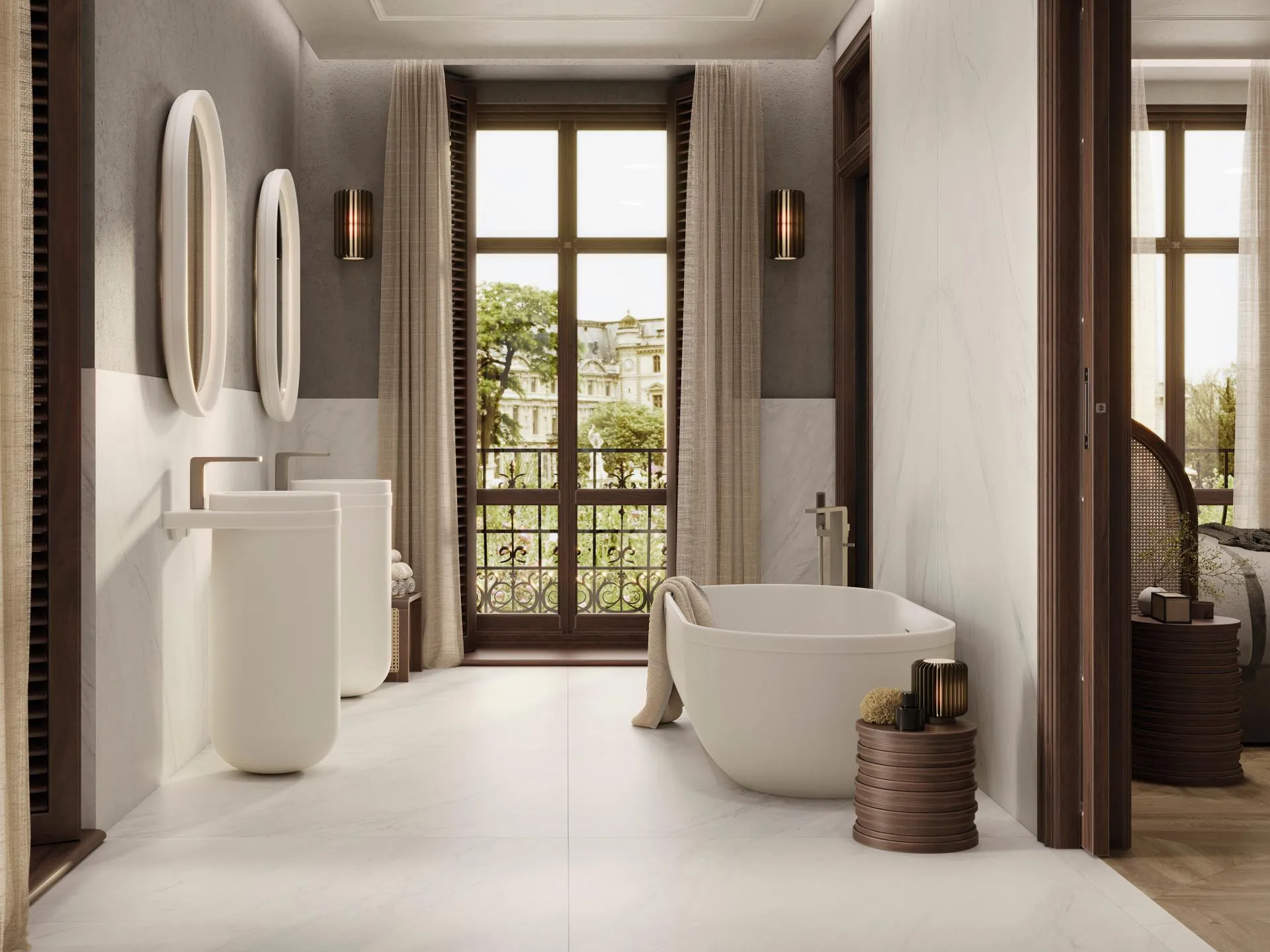
CUSTOM DEVELOPMENT
Furniture can be developed specifically for individual projects.
Proportions, material and surface are defined in coordination with the space, allowing the piece to integrate with floors, walls or architectural elements.

SUSTAINABILITY
Natural stone furniture is defined by durability and permanence.
Pieces are produced to remain stable over time, with materials that age consistently and require minimal maintenance. The focus is on long-term use rather than replacement.